
When October arrives in Tacoma and Puyallup, most homeowners assume painting season is over. For exterior work, they are mostly right. Daytime highs settle around 59 degrees, overnight lows drop to about 44, and rain falls on roughly 15 days of the month.
The end of the exterior season does not mean that you have to stop yourself from other painting projects. Fortunately, the inside of your house is temperature controlled, which allows you to focus on your interior painting projects and add a fresh coat of paint to your cabinets, trim, ceilings, and full rooms.
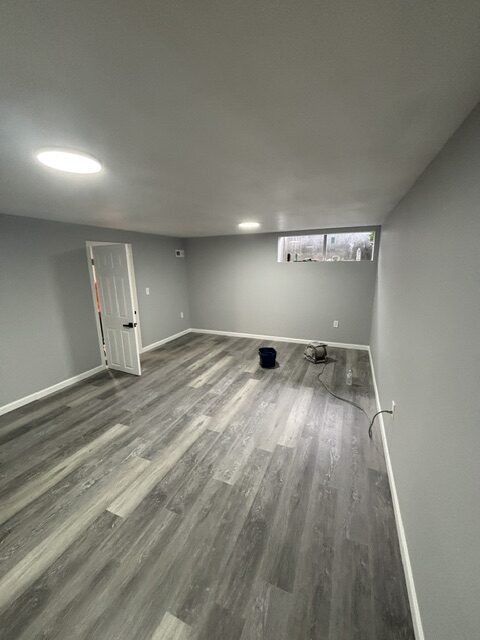
1. Cabinet Painting is Still a Strong October Project
Kitchen and bathroom cabinets change the look of a home more than anything else on this list, and painting them costs a fraction of replacing them. A full replacement typically runs $15,000 to $30,000, while painting the same kitchen usually lands between $5000-10,000.
Cabinet work also depends more on conditions than any other interior job. The finish is the whole project, and a finish is only as good as the environment it hardened in. A cabinet enamel needs stable temperature, low dust, and controlled humidity for several days while it cures. A heated house in October gives you that. A July job with the windows open and a fifteen-degree swing between afternoon and midnight does not.
What you should expect
You can expect for a project like this to take about a week or so to complete. The doors and drawer fronts come off and get sprayed in a controlled space while boxes and face frames get finished in place. Your kitchen will still be usable throughout the process, but the doors are off for most of it, so plan on open shelving for a few days.
How you should prepare
Empty your cabinets and drawers and clear the counters before the crew arrives. It will help streamline the process for crew and give you time to restore pantry items. After the job is done, you’ll want to go easy on the new finish for the first few weeks. Your cabinets may be dry to the touch, but it can take upwards of 30 days for them to be fully cured.
2. Trim, Baseboards, and Doors
Trim painting is the project people postpone longest and regret most, because the damage compounds while you wait. Chipped baseboard wicks up moisture every time you mop, and casing with failed enamel starts to swell at the joints.
The reward of fresh trim is how it makes everything around it look better. Crisp lines at the baseboard and casing do more for a room than most people expect, and that crispness comes down to how the paint dries.
Trim enamel levels as it dries, which is how brush marks disappear and you end up with a smooth finish instead of a striped one. That leveling needs a stable room, because paint that dries too fast skins over before it can settle, and a heated house in fall holds far steadier conditions than an August afternoon with the windows open.
What you should Expect
Trim is slower than it looks with most of the time spent on caulking, filling, sanding between coats, and cutting clean lines where trim meets wall and floor.
It also takes a different product than your walls or ceilings. Trim gets an enamel that cures hard enough to survive hands, vacuums, and cleaning, and levels as it dries so you get a smooth finish rather than brush marks.
How you should Prepare
Clear what you can from the room and point out soft or water-stained trim before the crew starts, since those spots need repair rather than paint. Stay off the fresh finish for a few days while it hardens.
3. A Ceiling Update Changes a Room More than People Expect
Ceilings get treated as an afterthought. For decades, flat builder white was the default in every room. White still works, especially in small rooms or spaces with little natural light. But most homeowners only start thinking about it once they look up and really see what they have.
That’s usually what prompts the call. If your ceilings haven’t been painted since you moved in, there’s a chance that they’ve yellowed over the years from cooking and heat. A fresh coat goes on and the difference shows at the wall line plus it can be a good time to consider crown molding.
What you should expect
Ceilings move fast with a crew covering a room in about a day or so. The prep is where the time goes. Water stains need a stain-blocking primer or they bleed straight through, and any patching or texture repair happens before paint.
How you should prepare
Clear the room as much as you can and expect the floor to be fully covered, since ceiling work throws fine spray everywhere. Mention any past roof or plumbing issue during the estimate so the repair gets priced in rather than found mid-job.
4. Whole-room Repaints Run Fine All Winter
If your exterior project has to wait, October is the month to move indoors. Bedrooms, living rooms, hallways, dining rooms, and bathrooms all repaint well through fall and winter when the indoor environment is managed properly.
Doing a full room also lets you handle walls, ceiling, doors, and trim as one decision instead of four. Choosing the colors and finishes together is how you avoid a room where every surface looks like it was decided in a different year.
What you should expect
A full room takes longer than most people plan for, since walls, ceiling, doors, and trim each need a different product and their own dry time between coats. Expect the room to be out of use for a few days rather than an afternoon.
How you should prepare
Move furniture to the center or out of the room and take down anything on the walls. Flag any damage you want repaired before the crew starts, since patching and caulking happen ahead of paint.
Why Exterior Painting gets Unreliable in October
Exterior paint needs the surface to hold above about 34 degrees while it cures, not just the air to be mild that afternoon, and it has to hold overnight. Pierce County nights are into the low 40s in October, so a coating that went on fine at 2 p.m. can fail on a clear night. Paint that never formed a proper film traps moisture behind it, which will then blister by February, and then peel by spring.
Deck stain is the tightest window of all, since the boards rarely dry out between rain events after mid-October. None of this means everything stops on October 1, but siding and deck work get less predictable from here.
Book your Interior Painting Projects Before the Holiday Rush
The exterior window is closing. The interior season is just starting, and it runs on conditions you control rather than a forecast you do not.
If you are in Tacoma, Puyallup, South Hill, Lakewood, Gig Harbor, Bonney Lake, Sumner, or University Place and you have been sitting on an interior list since spring, this is the month to move it. Cabinets, trim, ceilings, and full rooms all cure reliably indoors right now, and it’s best to schedule now rather than later.