
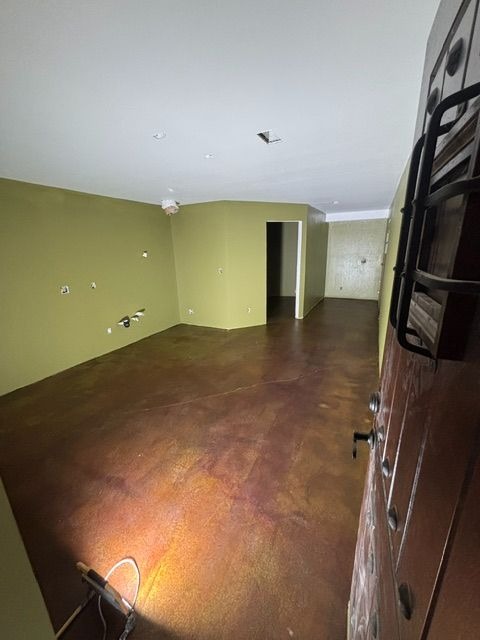
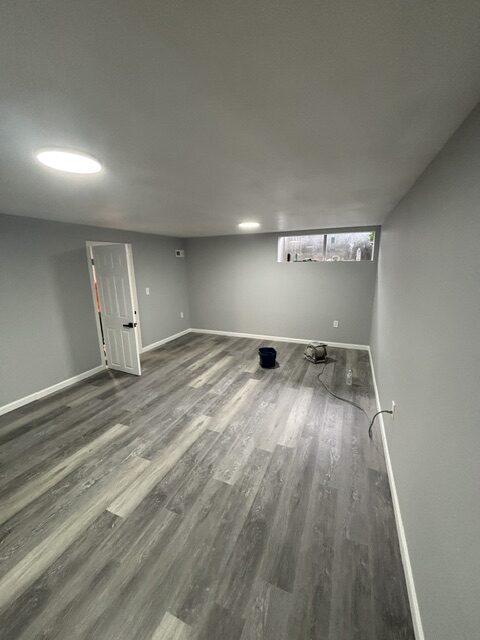
Second week of February. You put your hand on the north wall of the back bedroom and it comes away cool and damp. Behind the dresser, near the baseboard, there’s a gray bloom on paint you rolled in August. And the color you fell in love with at the store now reads like wet cardboard.
Most advice on interior paint sheens would have told you flat was fine for a bedroom. That advice was written for a climate that dries out between storms. Tacoma spends October through April not doing that.
Sheen is a moisture decision before it’s a style decision
Every can of paint is pigment suspended in a binder, and that ratio sets the sheen. Flat carries a heavy load of pigment and not much binder, so the dried film is full of microscopic voids that scatter light. That’s why flat hides a bad drywall seam better than anything on the shelf, and it’s also why flat takes on water and gives mildew a foothold.
The same thing that hides your drywall seams soaks up shower steam. Shinier paint solves that, because more resin and less pigment leaves a solid film with no holes for water to sit in. However, you do give up is forgiveness meaning that a solid film bounces light back at you, which causes every nail pop to show. Eggshell and satin land between those two, and picking between them is most of the job.
1. Flat and matte
It swallows light and forgives walls.
Keep flat on ceilings and out of bathrooms, entries, kitchens, and laundry rooms. Keep it off any exterior wall that runs cold. The Washington State Department of Health puts the failure spots in writing: mold grows where warm moist air meets cool wall surfaces, which means inside cold exterior walls, behind dressers, and in closets where you store things against the wall. That last one catches people. Premium mattes have narrowed the gap, though. Benjamin Moore Aura and Sherwin-Williams Emerald use crosslinking resins that let a low-sheen film take a scrub, so a contractor flat from 2004 and a premium matte from this year are not the same product.
Pros: hides drywall seams, nail pops, and wavy plaster better than anything else. Touches up without flashing, so you can spot-fix a scuff years later.
Cons: holds dirt in the film. Wiping it burnishes a shiny spot into the wall.
Gloss meter reading: under 5 at 60 degrees.
2. Eggshell
This is the default answer to what sheen for interior walls in a house that gets seven months of rain.
Eggshell sheds condensation that forms and dries on a cycle, and it still hides the lumps in a 1920s bungalow’s plaster. Living rooms, hallways, and most bedrooms belong here. Asked about the best paint sheen for walls with no other detail, eggshell is the safe answer.
Pros: takes a damp cloth without burnishing. Hides enough wall texture to work on old plaster.
Cons: touch-ups flash more than flat. Not enough film for a bathroom that fogs.
Gloss meter reading: 10 to 25 at 60 degrees.
3. Satin
Step up where the wall gets touched, splashed, or cold.
Kitchens, mudrooms, laundry rooms, kids’ rooms. Satin also earns its place on north walls in rooms with one window, because the extra reflectance puts light back into a room that doesn’t have much. You pay in visible flaws, so satin on old plaster needs first.
Pros: scrubs clean, which matters on a hallway wall that catches wet coats all winter. Bounces light in dark rooms.
Cons: shows roller lap marks if you stop mid-wall. Every patch and ridge reads under raking light.
Gloss meter reading: 25 to 35 at 60 degrees.
4. Semi-gloss
Trim, doors, sashes, and bathroom walls where the fan is undersized or vented into the attic.
Window sills deserve their own line. Older windows here run condensation down the glass every morning and it pools on the stool. That’s where paint fails first in this region. Semi-gloss there, gloss if the window sweats hard.
Pros: sheds standing water instead of soaking it up. Cleans repeatedly without wearing through.
Cons: unforgiving on any surface you didn’t sand. Brush marks set up fast and stay.
Gloss meter reading: 35 to 70 at 60 degrees.
5. High Gloss
Hard, washable, unforgiving. On a wall it turns every imperfection into a highlight.
High gloss belongs on surfaces that get handled and hit: Craftsman trim, handrails, cabinet doors, a mudroom bench that takes wet boots twice a day. When you’re wiping rain off trim from October through April, gloss is the film that survives the cleanings. It also magnifies whatever is under it, so plan on sanding and deglossing first. Waterborne alkyd enamels like Benjamin Moore Advance level out as they dry and hide brush marks a straight latex would leave standing.
Pros: the most durable, most washable film available. Reflects light into rooms where a single window does all the work.
Cons: requires the most prep of any sheen, and shows every skipped step. Reads cold and hard on large surfaces.
Gloss meter reading: over 70 at 60 degrees.
Where the room comes in for Interior Paint Sheens
The wetter and colder the room, the higher up the ladder you go. A ten-minute shower leaves a bathroom at 80 percent humidity, past the ceiling the EPA sets for mold prevention, which is why bathrooms and mudrooms land on satin or semi-gloss while bedrooms stay on eggshell. In short, each room does best with a different finish.
- Ceilings, most rooms: flat
- Bathroom ceilings: satin
- Bedrooms, living rooms, hallways: eggshell
- Kitchens, laundry, kids’ rooms: eggshell or satin
- Bathrooms: satin with a working fan, semi-gloss without
- Mudroom walls: satin up top, semi-gloss below the chair rail
- Trim, doors, and window sills: semi-gloss, or high gloss where the window sweats
- Mudroom floors: porch and floor enamel, not wall paint
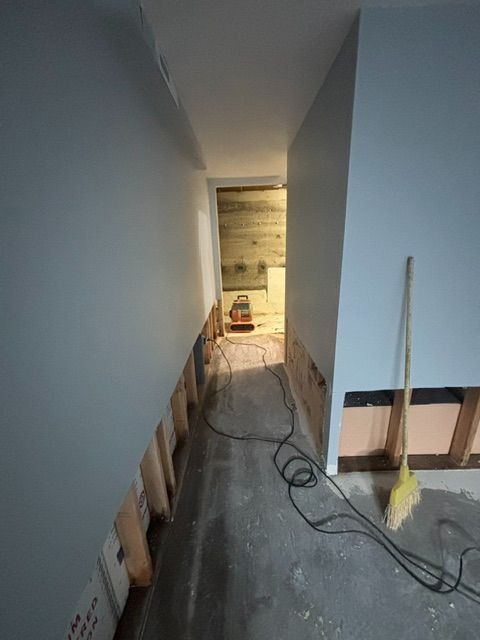
Choosing is the easy part
Sheen comes down to two questions. How much moisture does the room see, and how much do you need the walls to hide? Answer those and the ladder sorts itself out. Progressive Painting works on King and Pierce county houses year round, so if you’d rather have someone walk the rooms with you and handle the prep, call us today to set up an appointment.
What sheen should I use in a bathroom?
Satin if the fan actually moves air, semi-gloss if it doesn’t or if it vents into the attic. Use satin on the ceiling too. Flat sits under a column of steam and grows mildew in a ring around the light fixture.
What’s the difference between eggshell and satin?
About fifteen points of reflectance, and one decision. Eggshell hides more of your wall, satin cleans better and holds up to moisture. Eggshell for living rooms, hallways, and bedrooms. Satin for kitchens, mudrooms, laundry rooms, and kids’ rooms.
Why doesn’t my brand’s satin match the numbers in this guide?
Sheen names aren’t standardized. One manufacturer’s satin is another’s low-lustre or pearl, and the reflectance ranges behind those names differ by ten points or more. Check the gloss reading on the data sheet rather than trusting the word on the can.